When my kids and I moved to North Carolina ten years ago, we needed to put down roots quickly. I was a suicide widow and single mom with a travel-heavy job; they were five- and six-years-old, about to start a new school in a new state in a different life. We needed a village, to find our people and join a circle of care like the one that sustained us in Florida.
A pet would be nice, I thought: an entrée to community, something to talk about with friends. A creature to snuggle and take care of, an Other to focus on when we got sick of one another.
Thanks for reading Life, Changing! Subscribe for free to receive new posts and support my work.Subscribe
A little joy.
So we got a cat. Whose predator instinct was too much for our love of local songbirds, so off to a farm he went. A real farm, with an eager new owner and a mouse problem, though not anymore, I suppose.
Then we got fish. Or, my daughter got a Betta fish. Which lived to his ripe old Betta fish age of two, and died on schedule.
Then we got a dog. Then two Guinea pigs, then a chameleon. Only the dog is still with us, curled up beside me right now (and featured in October’s muse letter).
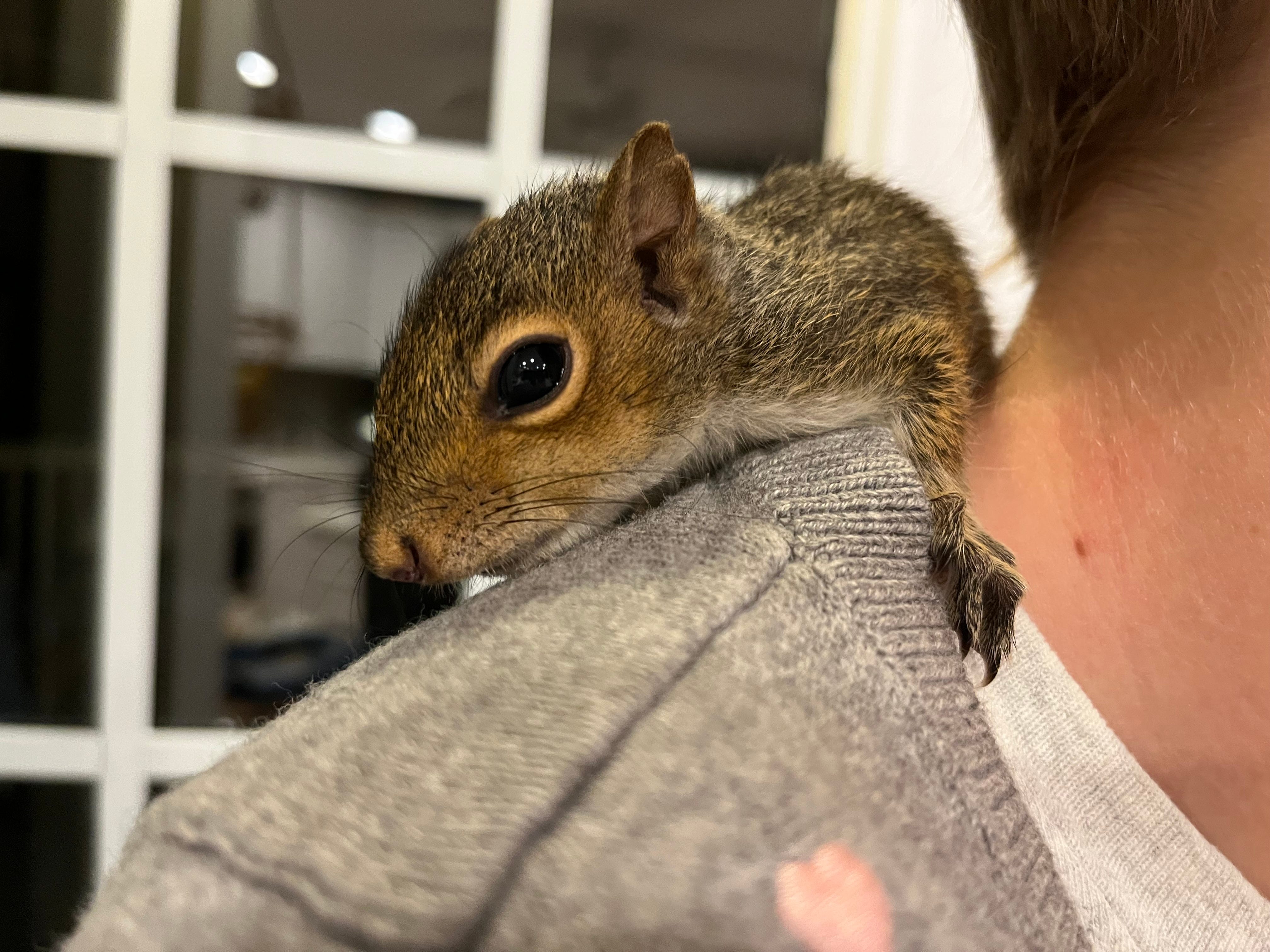
Along the way, we adopted miscellaneous wildlife for anywhere from an hour in a shoebox to a few days in the fenced-in garden: a five-lined skink, a bunny, a newborn rat, a nest of newborn rats, a nest of newborn raccoons, many turtles. A baby squirrel joined us for breakfast one morning, perched on my daughter’s shoulder.
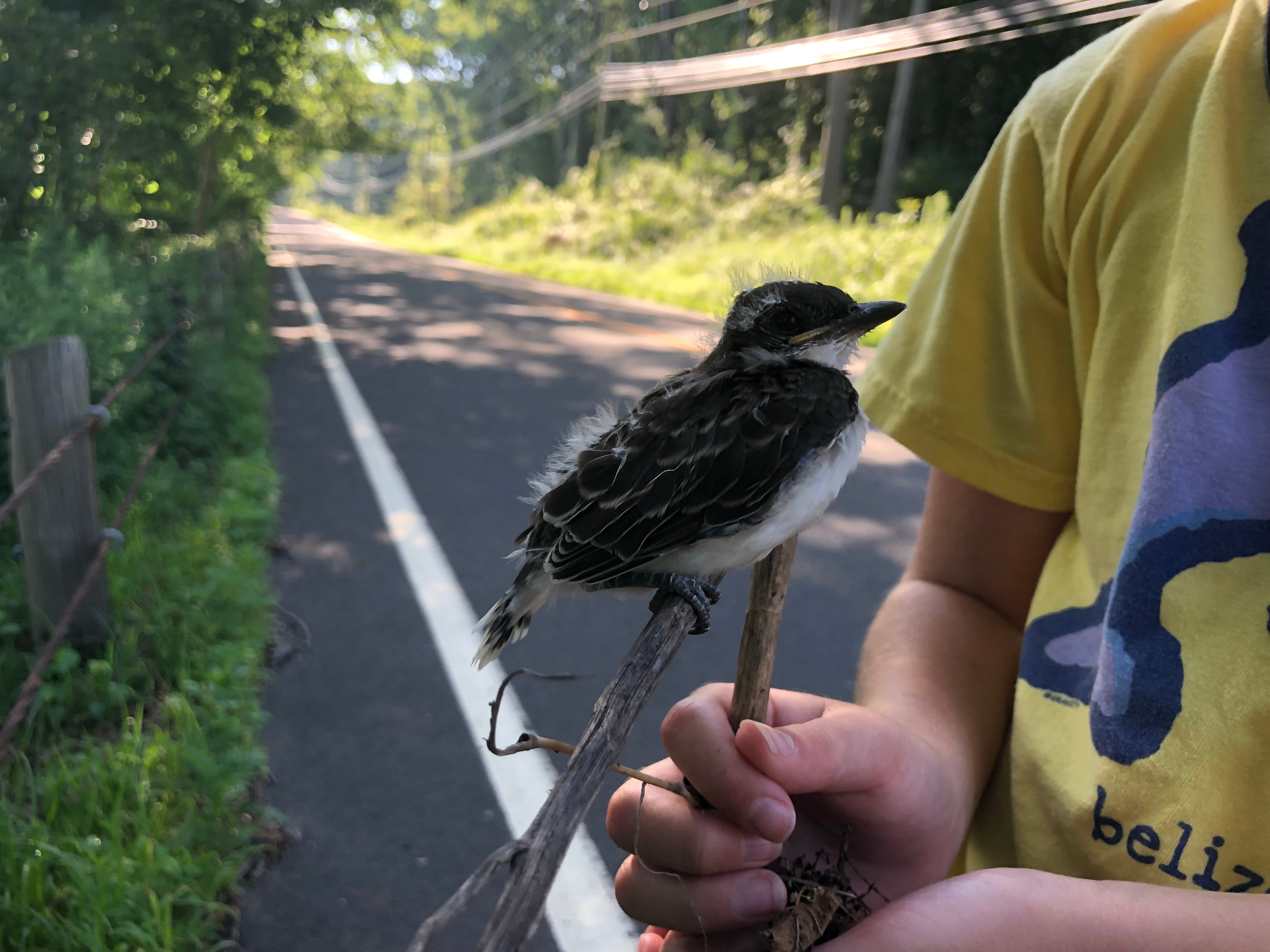
Baby bird rescues were common: the kids would be out in the yard and one would shout “rescue alert.” Cue the milk crate over the struggling blue jay chick to protect it from hawks until its parents could scuttle it back to wherever blue jays convalesce.
With each animal encounter, delight bloomed in the kids’ faces. I often wonder about the source of that light.
What were they looking for, or feeling, as they tended to these creatures? Responsibility for a life smaller than their own? Companionship? Discovery of wildness? I didn’t want to ask for fear of breaking the spell. It had been so long since I’d felt such lightness, I wanted to hang on to my own happiness at seeing theirs.
My instinct to throw open our doors to new life was rooted in their joy, which came back to me in spades as my own. The ripple effect felt good again. We’d been the center of grief circles for two years, my husband’s sudden death a stone of loss sending waves of complicated emotions in all directions and creating eddies of caretaking I always appreciated but could never repay.
Taking care of other beings allowed us to feel like villagers again, to rejoin the ebb and flow of caregiving that distinguishes a community.
New delights abound these days, for all of us, but they’re less fluffy or scaly. Sometimes they’re big, like a trip overseas. More often they’re small — a new SNL episode that hits the mark or school delayed by weather. My son’s face flushed from a personal record on the track; my daughter’s flushed from her jazz saxophone solo. Their exertion mingles with pride at honing a skill worthy of the work.
Or maybe it’s just endorphins. I still don’t want to ask. For me, watching them enjoy something never gets old. It’s taught me to linger in moments that feel not just good, but right.
Savoring is a gift this season. It was a difficult fall in a difficult year. Besides the relentless defeat I feel at the state of world affairs (ok, mostly US affairs), uncertainty about what lies ahead for my work tugged at different heartstrings. New pathways are emerging, their endpoints still unknown.
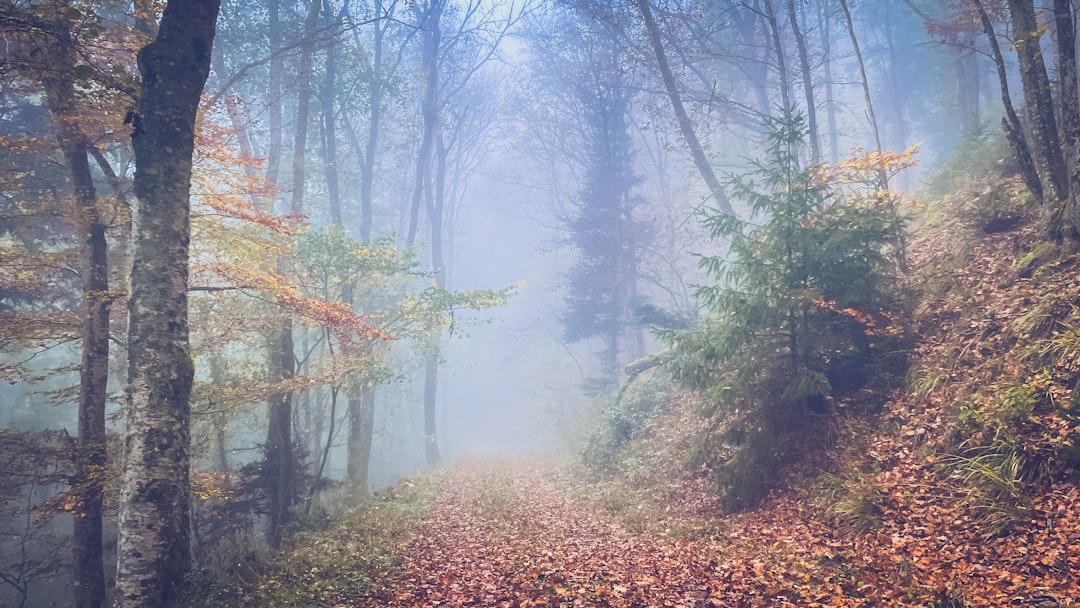
I sent out ten book proposals last week for Life, Changing: Loss, Love, and To-Do Lists after Suicide. Ten carefully researched, lovingly written, and professionally edited prayers went up to the writing gods, aka literary agents. A year’s worth of excruciating, fulfilling work blown like dandelion fluff into the air to settle . . . in holiday inboxes.
A wish for someone to see my vision for the book as I do.
A lifeline and companion to people suffering what is hopefully the worst loss of their lives. An opener of difficult conversations, the kind that hurt terribly but eventually heal deep wounds. An invitation for all the people hovering in the wings to do the work, whatever it is, to support others. And perhaps find, as I have, that care ripples out and back in extraordinary ways: learning how to support others, really be of service on their terms, made me better at supporting myself.
I’m flushed with exertion and pride. And probably some endorphins.
I’m also reminded of wise words from a favorite author:
How we spend our days is, of course, how we spend our lives.
—Annie Dillard
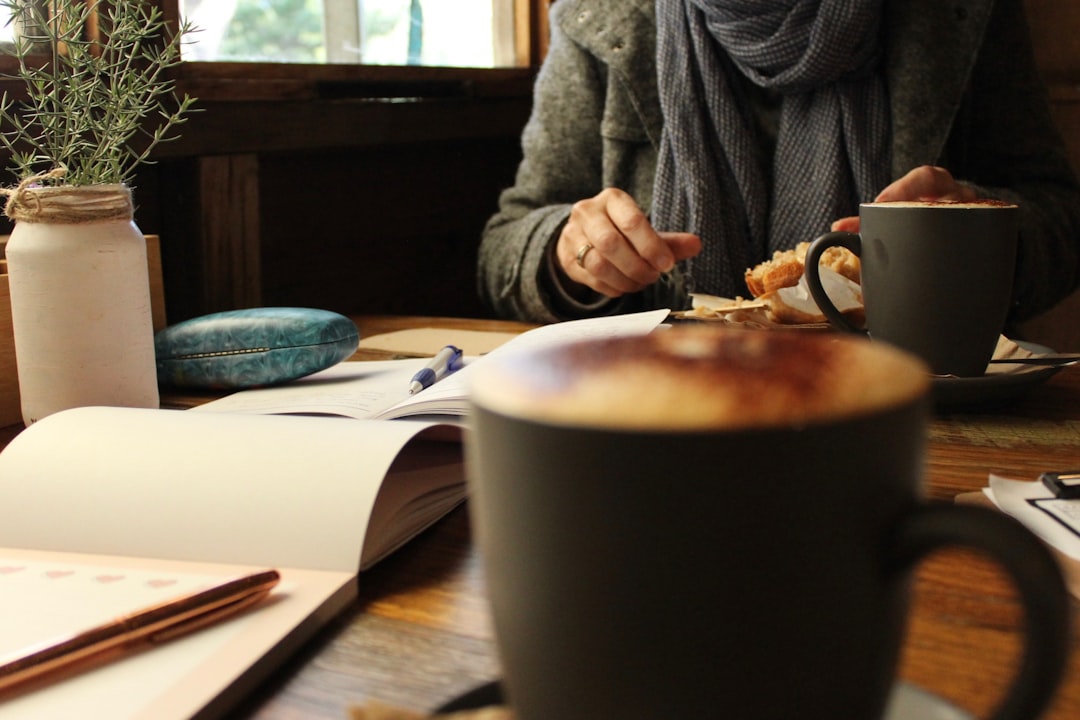
In between the highs and lows are ordinary moments, the passage of time without our response to it. The right now or just ahead parts when life down the road looks a bit foggy. No hopes or fears, treats or tragedies, just being. Doing the next thing that needs doing. Or not, knowing it will happen if it’s important. Like updating the calendar. Making that phone call. Folding the laundry.
We don’t celebrate or regret, just carry on, savoring a little more today than yesterday.
Former journalist and anti-time management advocate Oliver Burkeman has a wonderful take on the intersection of happiness and time that are especially poignant in New Years Resolution season. His conversation with On Being podcast host Krista Tippett a few years ago is well worth a listen. To sum up:
The core challenge of managing our limited time isn’t about how to get everything done—that’s never going to happen—but how to decide most wisely what not to do, and how to feel at peace about not doing it.
— Oliver Burkeman
It was dark when I came into the kitchen this morning, quietly while the house still slept. Impatient for the coffee pot to start according to the timer I set last night, I turned it off, then on. Hit Start and waited out the ten-minute brew cycle.
The machine warmed itself, then steamed and gurgled while I stood at the sink, inhaling the day ahead. My fingertips brushed a sticker on the underside of the counter, then another, worrying the plastic edges, flimsy like dead skin.
I knew what they were. My son has been affixing fruit stickers around the kitchen perimeter this way for more than a year. Initially for his own amusement, I learned, but later to enjoy the amusement of others. I stopped removing them and started enjoying a chuckle every time they remind me that I share a home with a crafty kid.
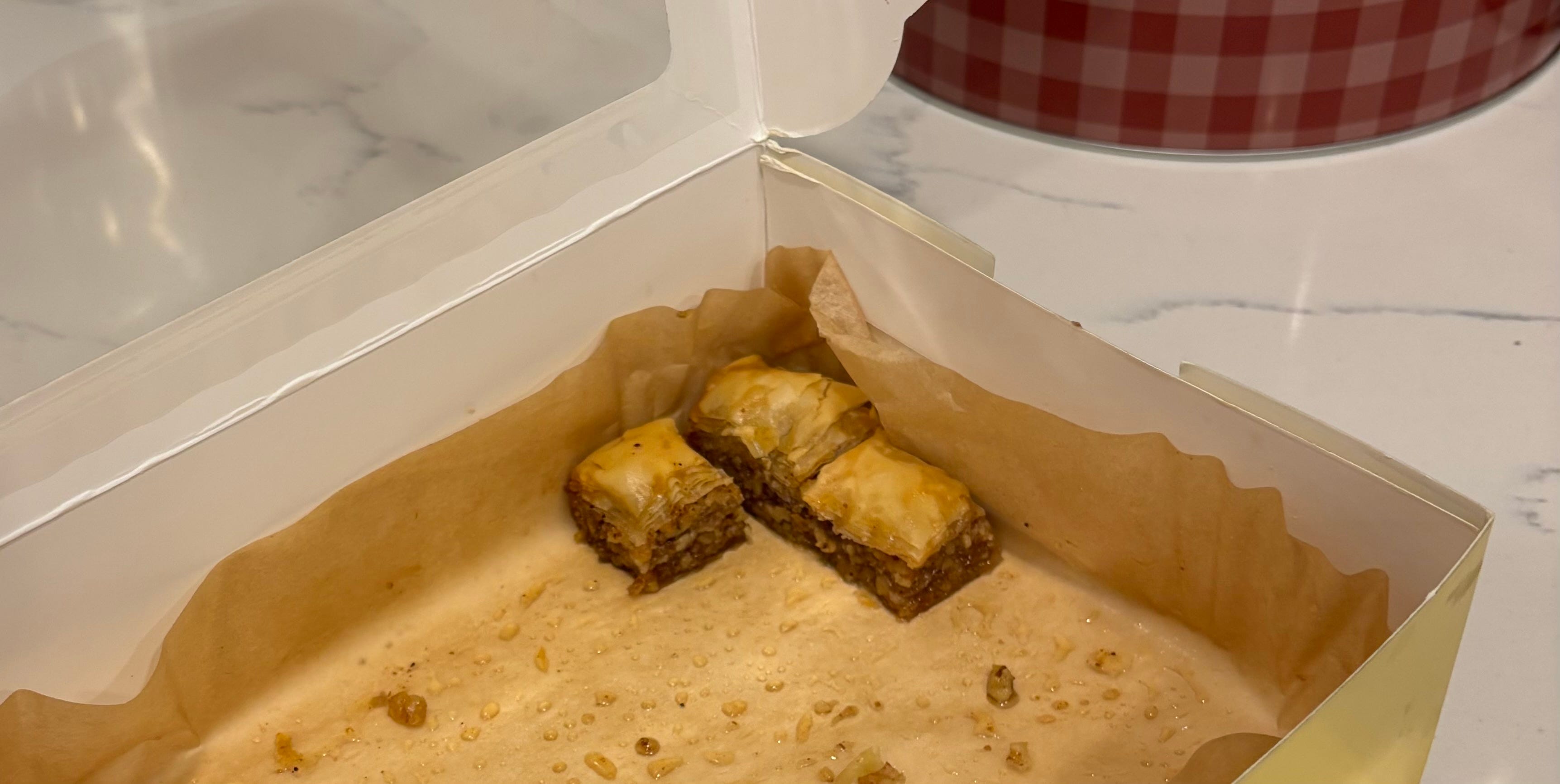
The coffee ready, I turn to the last few pieces of baklava left from Christmas. They were made by baker friends who are also the family of origin for our predator cat almost ten years ago. The beginning of our new village.
I eat one slowly, then another, let the sweetness and crunch dawdle together. My daughter and I have been declaring “Baklava for breakfast!” regularly this winter break. I’ll leave her the last piece.
These are precious moments. I want to consume them, let them fill me against future hunger. Or bathe in them, sink into their warm buoyancy that I might float more gently through turbulent waters that will surely come.
I also want to grab them, stitch them together like a garland so they remain connected. Then hold one end while I hand you the other to pass on, a shared gift of sustenance and small delights as our mutual care ripples out to meet the needs of the next moment.
In the meantime, I wish you a peaceful close to this year and a gentle beginning to the next. May we all find great comfort in small things.